
Mold Inspection
A mold inspection combines visual examination and moisture readings to locate active growth and identify the moisture supporting it.
See mold inspectionGet a home mold test tied to a clear decision in Bell. Start with moisture and use targeted samples when useful.
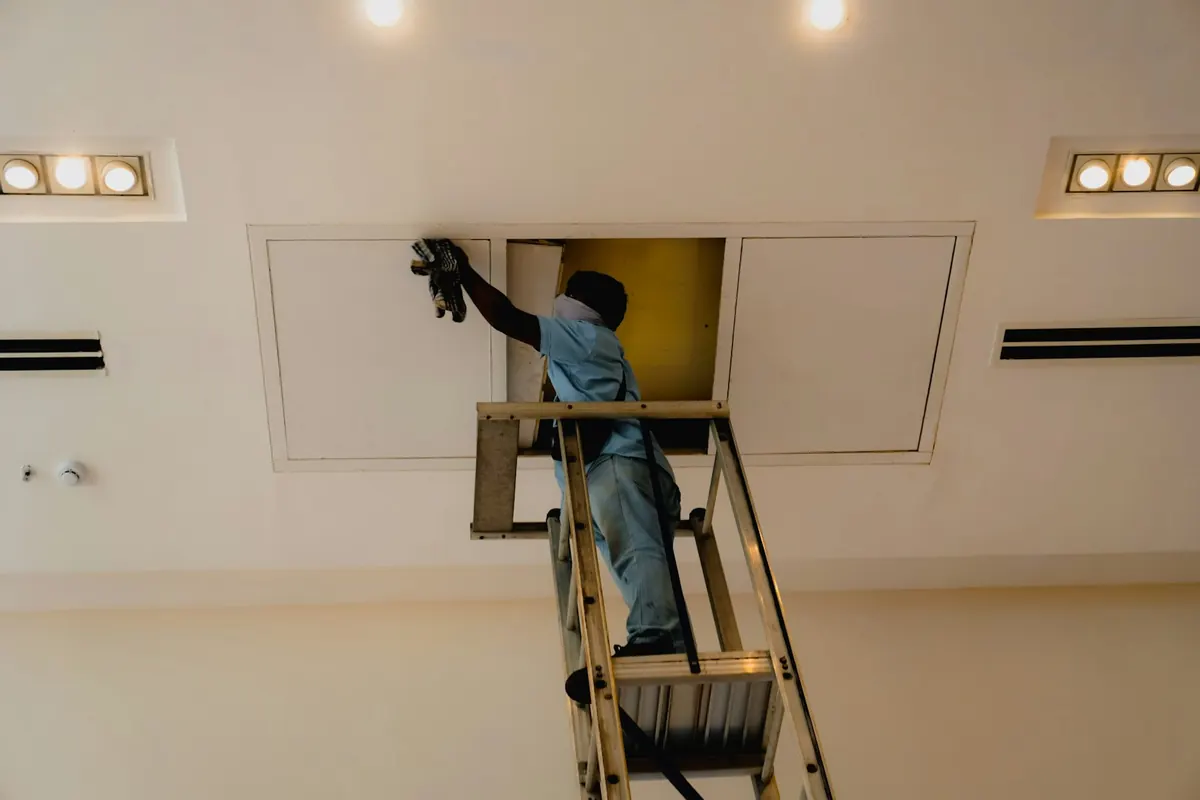
The plan comes from a visual inspection, moisture mapping and focused sampling.
The tester examines materials for water damage, mold growth and odor. Damp locations are documented with a moisture meter. Thermal imaging helps direct the inspection, but it does not identify mold.
In mold air testing, an indoor reading may be compared with an outdoor baseline. A pump with a spore trap captures air, while a swab or tape lift gathers surface material. The findings are limited to those samples. They do not represent every cavity or assess personal health risk.

For each sample, require a specific question plus an explanation of limitations.
Post-remediation verification should come from an independent assessor.
The report should define removal, containment, cleaning, drying and repair.
Confirm the method for finding the source and applying results to the removal scope.
Sample when the result could affect the planned scope.
Porous materials may become wet after leaks. To prevent mold growth, dry water-damaged items and areas within 24 to 48 hours. Control the water source before results arrive.
Do not run suspect HVAC equipment. Use the inspection to identify affected equipment, materials nearby and ductwork.
A swab or tape lift represents a single location rather than the whole home. Moisture correction and cleanup remain necessary for visible growth.
Choose an independent assessor, separate from the removal company, to confirm cleanliness and dryness.
Address water safely, then take care not to disturb mold.
Call (844) 352-3560For testing only overall, Fixr gives $50 to $700 as the range. Its mold air test range is $500 to $700 in total. Surface and air samples for a stain test are $150 to $200 in total, while an HVAC mold test is $50 to $75 overall. The published numbers do not quote your job.
The figures are published national cost guide ranges, not results of a property visit. Your property price is set after an on-site assessment and should be explained before work starts.
Ask about cost: (844) 352-3560Coverage can apply when the policy covers a sudden water event. The mold sublimit and policy terms determine payment.
California's Toxic Mold Protection Act includes a landlord written-disclosure section (Health and Safety Code 26147). By its own wording it applies only after the state adopts mold exposure standards, and the state health department has said it could not set them. Save repair records, reports and moisture readings.
Promptly report damage. Ask which records are needed and whether sampling, inspection and removal are eligible.
Under California's housing law, visible mold found by a health officer or code enforcement officer can make a rental substandard. Renters can contact their local health or code enforcement department to ask for an inspection. Retain messages about leaks and repairs, along with dated photos.
Your policy may address a burst pipe differently than neglected maintenance or a slow leak.
Inspect first, take purposeful samples next and finish with a report.
Water intrusion, porous materials, growth and odor are checked before the assessor documents moisture readings.
Every indoor sample should serve a defined purpose. Use an outdoor air sample when a baseline is needed.
A calibrated pump pulls air into a spore trap. Note both room conditions and location in the records.
Use surface sampling to collect from a specific spot, not to describe the whole structure.
The method determines whether lab results list mold types or report a spore count.
For the mold removal process, use a written scope of work to specify moisture repair, containment and materials.
An independent assessor evaluates the area before repair work, following air movers, drying and HEPA vacuum work.

Phone at any hour. A mold testing specialist takes your call, discusses what you see and outlines what comes next.
Sampling is not a substitute for fixing moisture or removing material under control.
You need experienced help for sewage or contaminated water. Do not let sampling postpone safe removal.
Drywall removal may release particles nearby. A containment barrier, poly sheeting, negative air pressure and a HEPA air scrubber help control dust.
A kit cannot map wet material in an attic, a basement, crawl space or other lower level.
Can you clean it yourself? EPA says an area under about 10 square feet can often be homeowner-cleaned after fixing the water problem. Get professional help for contaminated water, larger areas or HVAC involvement.
Let the material's condition and moisture guide the choice, not its color.

California has no state license or certification for mold assessors or remediators, according to the California Department of Public Health. General construction work above a small dollar amount does need a license from the Contractors State License Board (CSLB), so it is worth checking a contractor's license there and asking about their mold training. Ask if applicable rules require separation between remediation and assessment.
To prevent mold growth, dry water-damaged items and areas within 24 to 48 hours. Address the water problem first.
The federal government has not set a limit for indoor mold levels. Spore counts need context from moisture conditions, inspection findings and the method used.
The California Department of Public Health (CDPH) Air Quality Section publishes mold and dampness guidance and a mold FAQ. CDPH says visible mold, dampness, and mold odor are unhealthy and should be fixed, and that routine mold testing is not needed when mold is visible. Find out which property, removal or assessment rules are relevant.
Property size, access, the number of samples and the lab schedule shape testing time. Continue controlling leaks and drying promptly.
The full mold testing guide covers what is cleaned or removed, odor and air quality work, and the rules that apply in your state.
Read the full mold testing guideLocal humidity and housing, along with access to your property, can influence mold cleanup planning, moisture control and containment.
At 74 percent renter occupancy, many residents may depend on an owner to fix the leak first, since mold can return when the water problem remains.
Housing built around the 1956 median may have aging plumbing and flashing, so fixing the moisture entry point is necessary before cleaned or replaced materials stay dry.
Where single-family housing represents 61 percent of homes, identifying the property type helps determine which hidden spaces and neighboring surfaces should be checked.
The share of seniors living alone is 18 percent, so clear notes about leak locations and damp rooms can simplify arranging mold removal and repairs.
Ask on the phone about mold cleanup for nearby ZIP codes and communities.
A mold inspection combines visual examination and moisture readings to locate active growth and identify the moisture supporting it.
See mold inspection
Mold clearance testing is a check after removal, with air samples and a visual check, to confirm the area is clean.
See mold clearance testing
This service pairs a mold inspection with removal, so the crew finds where mold is growing and then cleans it out.
See mold inspection and removal
Mold remediation is the process of containing, removing and cleaning mold growth, then fixing the moisture problem that caused it.
See mold remediation
Mold cleanup means removing mold from surfaces and materials, bagging damaged items and cleaning the area so it is ready for repairs.
See mold cleanup
When you cannot see growth within walls, under flooring or beyond a ceiling, hidden mold remediation finds and removes it.
See hidden mold remediation (behind walls)
Water damage mold cleanup includes clearing growth caused by a flood or leak and drying the affected structure against a return.
See water damage mold cleanup
The size of the affected space, types of materials and required repair work are among the factors influencing mold removal cost.
See mold removal costThe assessor begins with moisture readings, your water history and a visual inspection. If a sample addresses a specific question, air can pass through a spore trap or surface material can be lifted. The findings need to inform moisture correction, removal and containment instead of being viewed alone.
No. People search for toxic mold and black mold, but appearance does not establish how risky growth may be. Sampled material can be identified by a lab, not the resulting health effects. Address moisture, identify affected materials and plan safe cleanup.
The overall range published by Fixr for testing only is $50 to $700 in total. Reporting detail, sampling approach, lab schedule, accessibility and sample count can change cost. Ask what each suggested sample shows and whether inspection, interpretation and a written report are part of the scope.
Post-remediation verification should follow removal, detailed cleaning and drying, but come before containment is dismantled or repairs conceal the area. Use an independent assessor for visual checks, moisture checks and any samples in the plan. Before you close the area, make sure the moisture source has been corrected.
No, not always. You can often address visible growth without naming its type if you already know the moisture source. Sampling is more useful when growth may be hidden, the affected area is unclear, documentation is needed or a result could change the remediation protocol.
What a sample captures at a specific place and time can be described when collection is done properly. You cannot use it to confirm every cavity or anticipate a person's response. Its usefulness depends on equipment, planning, conditions, the lab method and interpretation alongside moisture readings and visible evidence.
Get calm, practical guidance about mold testing, with calls answered 24 hours a day.