
Mold Testing
Mold testing collects surface or air samples for laboratory analysis of the mold types present and their amounts.
See mold testingGet an inspection plan for growth, odor or moisture concerns in Bell. It should identify affected materials, trace water and explain removal.
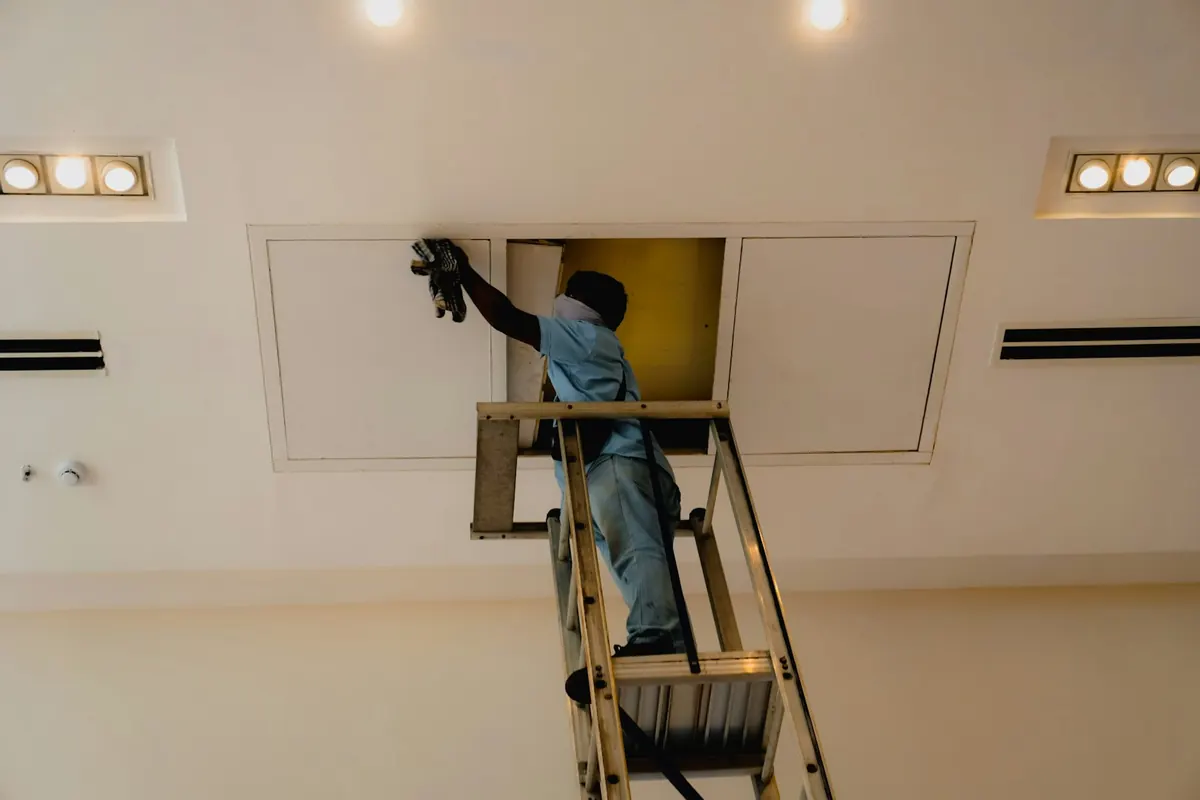
Using moisture readings, a visual inspection finds suspected growth, the source of water and affected materials.
An inspection covers stains, visible mold, water entry and odor. The inspector takes material readings with a moisture meter. While a thermal imaging camera can expose patterns, it cannot determine whether mold is present.
Defined questions may be addressed through surface or air sampling. A tape lift, spore trap or swab goes to an independent testing lab for examination. The resulting report should identify the affected area and give a remediation recommendation.

Ask why each sample matters, which lab receives it and how results change the plan.
It needs to list the moisture source, affected materials and access limits and describe containment.
For a decision independent of removal work, have a separate assessor perform final verification.
Ask how conditions, readings and leak history compare. Findings must identify corrections.
Request an assessment if visible growth, an odor or moisture indicates that cleanup might be necessary.
The words black mold describe a search term, not evidence of danger. According to CDC, color does not indicate risk.
Porous materials can become wet from a leak. To prevent mold growth, EPA says affected areas and items should be dried within 24 to 48 hours.
A persistent odor may point behind a wall, floor or ceiling. Find the moisture path before opening it.
Several rooms with growth could have a shared leak. Moisture mapping helps establish its limits.
Before the appointment, preserve evidence and protect the affected area.
Call (844) 352-3560A typical inspection averages $500. It includes lab testing and two samples, with a range of $450 to $800 in the Fixr guide. Inspection without testing runs $300 to $600 according to Fixr. Black mold inspection has a $600 to $800 listed range. Added samples are $60 to $80 each. These guide figures are not a quote.
The figures are published national cost guide ranges, not results of a property visit. Your property price is set after an on-site assessment and should be explained before work starts.
Ask about cost: (844) 352-3560Policy terms and the water's origin affect payment. Confirm coverage with your insurer.
Retain photos along with your report, readings and repair documentation. Find out what can be moved prior to an adjuster visit.
Under California's housing law, visible mold found by a health officer or code enforcement officer can make a rental substandard. Renters can contact their local health or code enforcement department to ask for an inspection. Save communications concerning access and leaks. Payment depends on the source, lease and policy.
After sudden water damage, ask if coverage includes assessment and sampling. Long-term leaks may differ.
California's Toxic Mold Protection Act includes a landlord written-disclosure section (Health and Safety Code 26147). By its own wording it applies only after the state adopts mold exposure standards, and the state health department has said it could not set them. Store the clearance report, repair records and protocol in the property file.
The inspector observes conditions, then records the work scope in writing.
Questions about past leaks and repairs come before the inspector checks reachable materials.
Thermal imaging together with moisture readings identifies damp patterns for further examination.
An outdoor air sample may serve as a baseline sample for comparison with an indoor sample in the plan.
The report lists moisture findings and affected materials. A remediation protocol defines containment, removal and drying.
Poly sheeting creates a containment barrier. A HEPA air scrubber can help establish negative air pressure.
Drywall, ceiling tile and carpet may need disposal. Non-porous surfaces may allow HEPA vacuuming.
Address the leak and check that materials have dried. An independent assessor should perform clearance testing.

Phone at any hour. Talk with a mold inspection specialist about what you are seeing and the steps ahead.
An assessment done carefully can limit disturbance while showing when you should seek professional help.
A dry surface does not rule out damp insulation. Readings guide closer checks.
Mold can trigger allergy and asthma symptoms in some people. CDC reports increased risk for people with weak immune systems, lung disease or asthma.
Opened walls can release particles. First decide on containment and suitable protective equipment.
Can you clean it yourself? EPA states that the homeowner is often able to clean an area under about 10 square feet. Fix the water problem first. Larger growth, HVAC involvement and contaminated water call for help.
The inspection report identifies what may remain after cleaning and what could require removal.

Home size, affected-room count, sampling and access determine inspection time. This includes attics, basements, crawl spaces and other lower levels. Confirm when results will arrive.
An odor can indicate material that is damp without showing where it is or how much is affected. The search is narrowed through visual checks, thermal imaging and a moisture meter.
Keep indoor relative humidity under 60 percent, with 30 to 50 percent as the ideal range, according to EPA. Dehumidifiers can help, but the sources of water must still be corrected.

The full mold inspection guide covers what is cleaned or removed, odor and air quality work, and the rules that apply in your state.
Read the full mold inspection guideLocal humidity and housing, along with access to your property, can influence mold cleanup planning, moisture control and containment.
At 74 percent renter occupancy, many residents may depend on an owner to fix the leak first, since mold can return when the water problem remains.
Housing built around the 1956 median may have aging plumbing and flashing, so fixing the moisture entry point is necessary before cleaned or replaced materials stay dry.
Where single-family housing represents 61 percent of homes, identifying the property type helps determine which hidden spaces and neighboring surfaces should be checked.
The share of seniors living alone is 18 percent, so clear notes about leak locations and damp rooms can simplify arranging mold removal and repairs.
Ask on the phone about mold cleanup for nearby ZIP codes and communities.
Mold testing collects surface or air samples for laboratory analysis of the mold types present and their amounts.
See mold testing
Mold cleanup means removing mold from surfaces and materials, bagging damaged items and cleaning the area so it is ready for repairs.
See mold cleanup
This service pairs a mold inspection with removal, so the crew finds where mold is growing and then cleans it out.
See mold inspection and removal
Mold remediation is the process of containing, removing and cleaning mold growth, then fixing the moisture problem that caused it.
See mold remediation
When you cannot see growth within walls, under flooring or beyond a ceiling, hidden mold remediation finds and removes it.
See hidden mold remediation (behind walls)
Water damage mold cleanup includes clearing growth caused by a flood or leak and drying the affected structure against a return.
See water damage mold cleanup
The size of the affected space, types of materials and required repair work are among the factors influencing mold removal cost.
See mold removal cost
Residential mold removal covers mold in houses and condos, from a single room to several areas, handled by a local crew.
See residential mold removalThey examine the area for dampness, stains, odor and conditions involving moisture. A moisture meter together with an infrared camera highlights areas to check without determining whether mold is present. Controlled access might be appropriate if the evidence points below the floor or inside a wall.
An assessment is useful when it traces the water source, maps the affected area and makes a remediation recommendation. Be cautious if methods, sampling purpose or reporting are unclear. A scope helps you compare containment, cleaning, removal and drying plans.
For inspection alone Fixr lists $300 to $600 for that work, compared with $450 to $800 for a typical two-sample visit with lab testing. Price can change with home size, access, sample count and lab fees. Before booking, find out what the service includes.
A general home inspection might identify moisture, staining or growth that can be seen without including focused moisture mapping or sample collection. If visible growth, odor or known water intrusion concerns you, find out what the inspection includes and whether another assessment is useful.
Expect moisture readings, a history of odor and leaks, visual examination of accessible spaces and affected-material documentation. Thermal imaging can show where to check more closely. When sampling answers a specific question, it remains optional. Results should support the moisture-correction and removal plan.
When you can clearly see growth and identify its moisture source, testing may not be needed. Sampling may help answer a specific question or support clearance testing by an independent assessor. Find out how results from an air sample, swab or tape lift could alter the remediation protocol.
Get calm, practical guidance about mold inspection, with calls answered 24 hours a day.