
Residential Mold Removal
Residential mold removal covers mold in houses and condos, from a single room to several areas, handled by a local crew.
See residential mold removalGet a plan for extensive mold growth across rooms in Bell. Cover containment, contents, drying and water correction.

When growth affects multiple rooms or building systems, whole-house mold remediation addresses it.
Moisture measurements and a mold inspection establish which materials and spaces are affected, along with the source. A work scope then identifies removal, containment and reconstruction.
Contents pack-out, demolition, HEPA filtration and negative air machines may be part of the mold removal process. Mold abatement refers to controlled removal, rather than eliminating every mold spore.

Find out which readings are needed before rebuilding and how the source will be corrected.
Find out how negative air machines, barriers, clean paths and access limits will be used.
A plan needs to identify who is responsible for cleaning, demolition, contents, rebuilding and drying.
An assessor who is independent should perform clearance testing. Possible verification methods include visual checks, air sampling or moisture readings.
Look throughout the home once mold growth or moisture spans room boundaries.
A single drainage, roof, plumbing or humidity problem may lead to patches on more than one floor.
EPA guidelines set 24 to 48 hours for drying items and areas with water damage to prevent mold growth.
A musty odor can point to damp drywall, flooring or insulation. Follow moisture patterns before opening a wall.
Black mold is a search term. According to CDC guidance, mold color does not indicate its risk.
Control water, leave growth alone and record the conditions.
Call (844) 352-3560Published guides put whole-home and whole-house work in the $10,000 to $30,000 range. For mold covering about 1,200 square feet, Fixr gives a $12,000 to $36,000 range. For an area of about 1,000 square feet, This Old House gives a $10,000 to $25,000 range using data credited to Angi. None of these figures is a quote.
Published national cost guides are the source of these ranges, rather than an inspection of your property. Before work begins, you should get an explanation of the property price determined through an on-site assessment.
Ask about cost: (844) 352-3560Insurance coverage depends on the water source and your policy. Long-term leakage may be treated differently than a sudden event.
Under California's housing law, visible mold found by a health officer or code enforcement officer can make a rental substandard. Renters can contact their local health or code enforcement department to ask for an inspection. Preserve dated photos plus messages documenting leaks and repair requests.
Submit promptly. Ask whether contents are covered and discuss photos, the mold sublimit and deductible.
California's Toxic Mold Protection Act includes a landlord written-disclosure section (Health and Safety Code 26147). By its own wording it applies only after the state adopts mold exposure standards, and the state health department has said it could not set them. Retain the scope, repair documentation, moisture readings and clearance report.
The cause usually determines coverage, rather than the size of the project. Save source-repair documentation.
The remediation sequence starts with assessment, then continues through removal, drying and verification.
Check the entire house to locate both moisture and growth. The findings establish affected materials and individual work zones.
Separate work zones using poly sheeting. A negative air machine helps prevent dust from leaving containment.
Belongings are separated into items for disposal or cleaning. Drywall, carpet and insulation are porous materials that may require removal.
Clean non-porous surfaces along with framing that is still sound. Cleaning cannot be replaced by antimicrobial treatment.
Drying equipment can consist of air movers and a dehumidifier. Moisture readings guide when materials can be closed.
Post-remediation verification should be performed by an independent assessor. It may include visual checks, moisture readings or air sampling.

Call at any time. Talk with a Whole-House mold remediation specialist about what you are seeing and the steps ahead.
Protective equipment, containment and moisture checks are necessary on large projects.
A HEPA air scrubber, poly sheeting and negative air pressure help restrict demolition dust.
Mold can trigger allergy and asthma symptoms in some people. Consider leaving if safe separation is not possible.
EPA guidance recommends experienced professional help for mold that follows contaminated water or sewage.
Can you clean it yourself? EPA guidance says an area under about 10 square feet can often be cleaned by the homeowner. Help is needed for contaminated water, HVAC systems and larger areas.
Some surfaces can stay after cleaning. Porous items may need removal when growth is embedded.

The schedule depends on verification, source repair, affected rooms, rebuilding, drying and contents.
A musty smell may indicate damp materials. Look around plumbing and walls, HVAC units, the attic, basement, crawl space and any other lower level.
Indoor relative humidity should remain under 60 percent, with 30 to 50 percent as the ideal range. Using a dehumidifier will not fix a leak.

The full Whole-House mold remediation guide covers what is cleaned or removed, odor and air quality work, and the rules that apply in California.
Read the full Whole-House mold remediation guideProperty access, local housing conditions and humidity may affect how you plan mold cleanup, containment and moisture control.
At 74 percent renter occupancy, many residents may depend on an owner to fix the leak first, since mold can return when the water problem remains.
Housing built around the 1956 median may have aging plumbing and flashing, so fixing the moisture entry point is necessary before cleaned or replaced materials stay dry.
Where single-family housing represents 61 percent of homes, identifying the property type helps determine which hidden spaces and neighboring surfaces should be checked.
The share of seniors living alone is 18 percent, so clear notes about leak locations and damp rooms can simplify arranging mold removal and repairs.
Ask on the phone about mold cleanup for nearby ZIP codes and communities.
Residential mold removal covers mold in houses and condos, from a single room to several areas, handled by a local crew.
See residential mold removal
When you cannot see growth within walls, under flooring or beyond a ceiling, hidden mold remediation finds and removes it.
See hidden mold remediation (behind walls)
Removal comes before repairing or replacing the flooring, insulation, drywall and other materials during mold damage restoration.
See mold damage restoration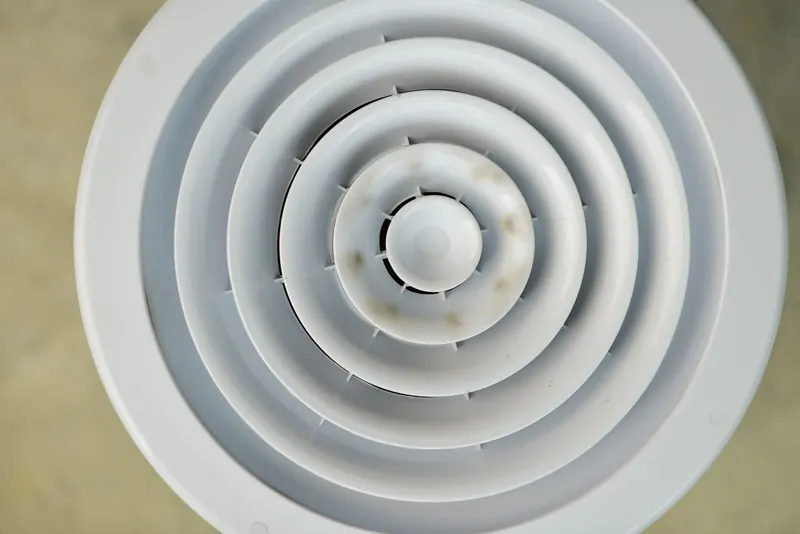
Ducts, drain pans, coils and vents receive air duct mold removal to prevent the HVAC system from continuing to spread mold.
See HVAC and air duct mold removal
Water damage mold cleanup includes clearing growth caused by a flood or leak and drying the affected structure against a return.
See water damage mold cleanup
Mold contents cleaning treats affected clothing, furniture and belongings, allowing salvageable items to be returned in clean condition.
See moldy belongings and contents cleaning
Mold clearance testing is a check after removal, with air samples and a visual check, to confirm the area is clean.
See mold clearance testing
The size of the affected space, types of materials and required repair work are among the factors influencing mold removal cost.
See mold removal costGrowth can be removed, but mold spores occur naturally. The practical goal is to remove growth and contamination, dry materials and fix the moisture source. A scope may be checked through post-remediation verification, but a home with no mold spores is not realistic.
The answer varies with HVAC contamination, work zones, essential-room access and the people living in the home. When safe separation cannot be maintained, temporary relocation may make sense. Request the staged project timeline and access limits before the work starts.
Check for damp materials, visible growth and a musty odor. Check a crawl space, basement, attic, other lower level or HVAC equipment while leaving growth undisturbed. Thermal imaging does not confirm mold. A moisture meter can direct checking in your mold in house inspection.
Remaining moisture allows mold to grow. Sources include roof or plumbing leaks, wet cavities, condensation, drainage problems, floods and high humidity. Fix the source. To prevent mold growth, EPA guidance calls for drying water-damaged items and areas within 24 to 48 hours.
Fix leaks and drainage, dry new water damage promptly and monitor relative humidity. Maintain indoor humidity under 60 percent, with an ideal range between 30 and 50 percent. Save repair records. Investigate the water source when a musty odor, stains or dampness come back.
Coverage depends on the policy and water source. Repeated humidity, a long-term leak or neglected maintenance may be treated differently from a sudden covered event. Discuss the deductible, mold sublimit, records and contents coverage, plus inclusion of demolition and rebuilding.
For calm and useful guidance about Whole-House mold remediation, you can reach someone by phone 24 hours a day.